Start with the size of the pattern
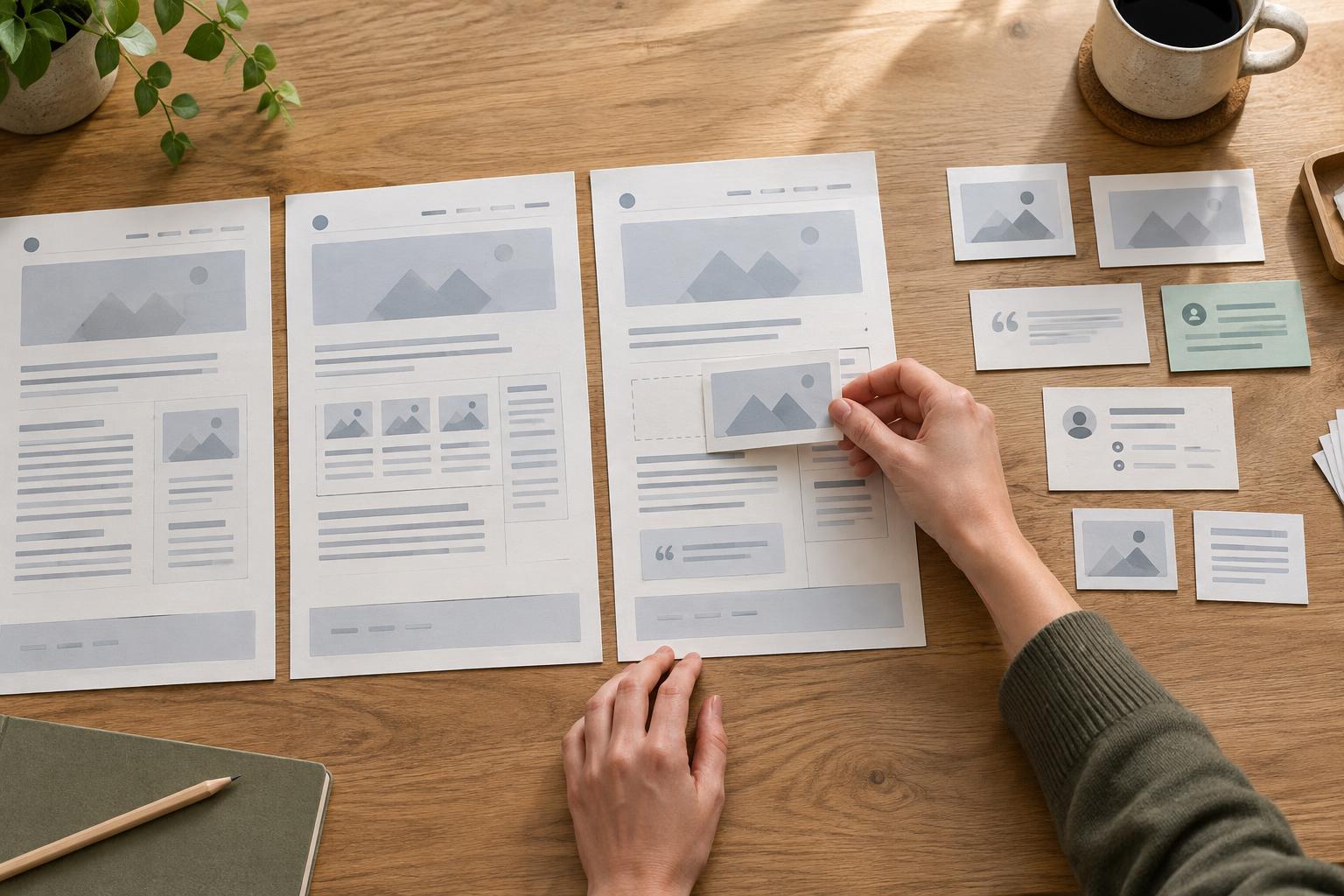
A page template defines the overall shape of a kind of page. It might specify fields for a title, summary, main text, contact details and related links, along with where those elements appear. A reusable block is smaller: a callout, set of opening hours, staff contact card or other element that can appear within different pages. Both reduce repeated work, but they solve different problems.
The simplest question is: what needs to stay consistent? If every service page needs the same information in a predictable order, a service page template is a good fit. If several kinds of pages need the same contact panel, a reusable block is more appropriate. A block can sit inside a template; choosing one does not rule out the other.
Use templates for recurring page types
Templates work best when pages share a purpose, not merely a visual style. An event page, for example, might need a date, location, registration information and an accessible description of what to expect. Making those fields part of an event template helps editors remember them and gives visitors a familiar path through each event listing.
A useful template provides enough guidance without forcing every page into identical prose. Separate fields can help when information must be displayed consistently or maintained independently. A flexible main content area can handle explanations that differ from page to page. For a small site, start with a few clear page types, such as service, event and standard information page, rather than creating a new template for every minor variation.
Before adding a field, ask whether editors will know what belongs in it and whether visitors benefit from its consistent placement. A field that is regularly empty or filled with awkward workarounds may belong in the main text instead.
Use blocks for repeatable elements
Reusable blocks are useful when the same kind of element appears across page types. Examples include a notice, a short testimonial with attribution, a group of related links or a contact card. They can let editors assemble a page without rebuilding each element or relying on improvised spacing and formatting.
Distinguish between a block design and shared block content. A contact card design might be reusable while each page has its own contact details. By contrast, one shared office-hours block might display the same content on several pages and update everywhere when edited. Label these options clearly: editors need to know whether a change affects only the current page or every page using the shared item.
Keep the block library small enough to understand. If two blocks differ only in a minor styling choice, one block with a sensible option may be easier to maintain. If a block needs many switches to handle unrelated jobs, it may be covering more than one content pattern.
Choose with editors and visitors in mind
Imagine a small organization publishing workshop pages. A workshop template can establish fields for the title, location, schedule and booking details. Within its main content area, editors might add a reusable preparation checklist or accessibility information block when relevant. The template protects the essential facts; the blocks support useful variation.
Test the setup with a few real pages before committing to it. Ask an editor to create a typical page and an unusual one. Notice where they hesitate, duplicate information or need to invent a workaround. Then review the published pages as a visitor would: can someone find the key details, follow a sensible heading order and understand links without relying on their visual position?
Flexibility should not depend on editors fixing layout problems by hand. Blocks should have clear names, meaningful fields and predictable behavior on narrow screens. Templates should make required information visible without encouraging placeholder text just to fill a space.
Keep the system easy to maintain
Document each template and block in a sentence or two: its purpose, where to use it and whether its content is shared. Assign someone to review the library occasionally. When editors repeatedly make the same workaround, consider changing the existing pattern before adding another option.
A practical rule is to use a template when you need a consistent whole-page structure and a block when you need a repeatable part of a page. Use both when a familiar page type still needs room for relevant, well-defined elements. The goal is not to eliminate editorial judgment. It is to give that judgment a structure that helps people publish accurate, accessible pages without rebuilding the site one page at a time.